Attic cleaning in La Habra, CA means more than hauling out old boxes — it means removing contaminated insulation, eliminating biological hazards, sealing entry points, and restoring the space so your home is safe, energy-efficient, and free of lingering odors. Clean Zone Attic Insulation is an insulation company serving La Habra and surrounding communities that handles every stage of this process, from the first inspection through final restoration. If your attic has gone unexamined for years, the sections below will walk you through exactly what a professional clean-out involves and how to decide whether you need one.
What is attic cleaning and attic restoration?
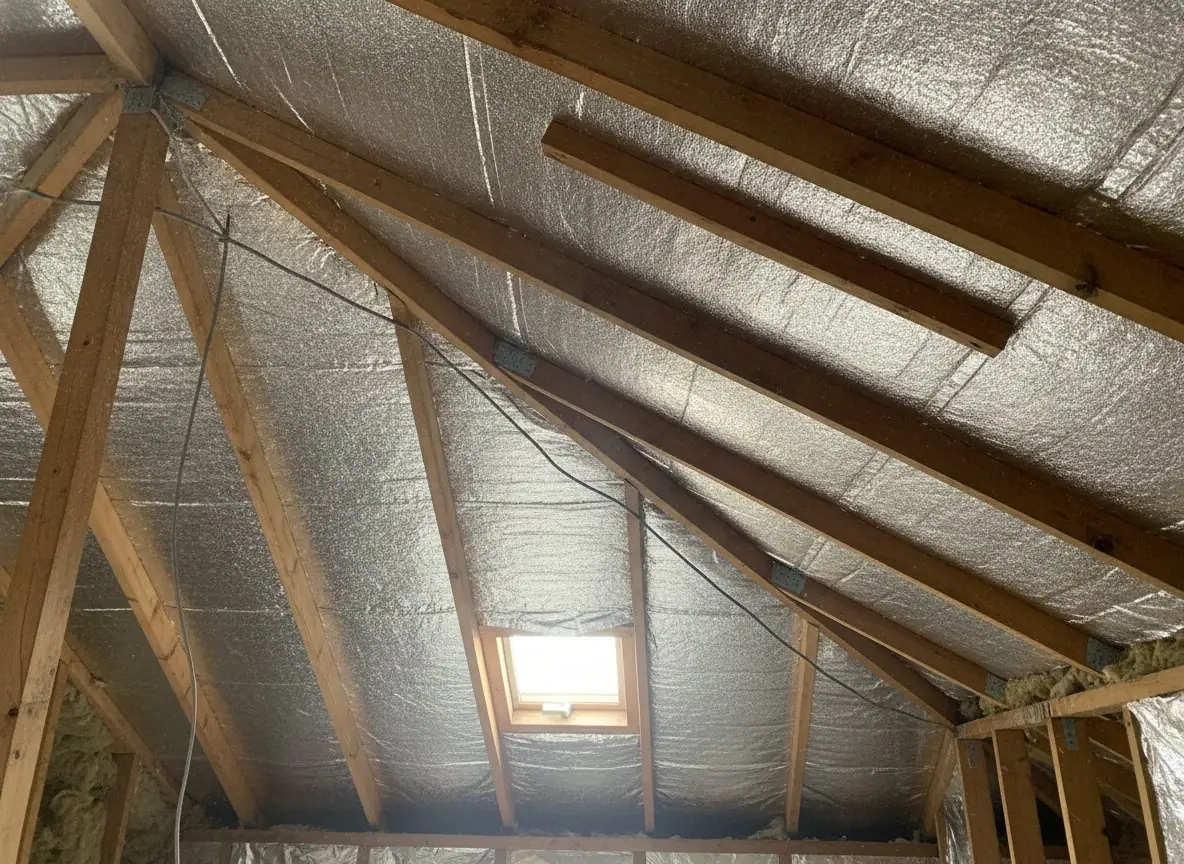
Attic cleaning is the systematic removal of debris, soiled or pest-damaged insulation, and biological contaminants from an attic space, followed by sanitizing and sealing. Homeowners who want to know what the sealing step involves can read more about air sealing on its own service page. Attic restoration goes a step further: after the contaminated material is cleared, the space is treated, sealed, and re-insulated so it performs as well or better than it did originally. The two are almost always paired, because decontaminating a space without replacing degraded insulation leaves the home under-insulated and at risk of recurring moisture and pest activity. La Habra's warm, dry climate can mask attic problems — reduced ventilation or rodent intrusion often goes unnoticed until energy bills climb or odors reach the living areas. Understanding what can go wrong up there starts with knowing the warning signs.
Signs your attic needs a clean-out
Several clear indicators point to an attic that needs professional cleaning before the problem spreads to the rest of the home. Watch for any of the following:
- Unexplained spike in heating or cooling costs — degraded or compressed insulation loses R-value and forces your HVAC system to work harder
- Scratching, scurrying, or other noises in the attic, especially at night
- Rodent droppings, urine stains, nesting material, or chewed wood visible in the attic
- Musty, ammonia-like, or foul odors entering the living space through vents or ceiling fixtures
- Visible mold or dark staining on rafters, sheathing, or insulation
- Wet or clumped insulation after rain — a common issue in La Habra homes with aging roof flashing or inadequate ridge ventilation
- Allergy symptoms or respiratory irritation that worsen indoors
- Insulation that is more than 15–20 years old and has never been inspected
- Recent pest control treatment with no follow-up clean-out of waste material
Any single item on this list is worth a professional look; multiple items together signal an urgent clean-out. Knowing what caused the contamination helps determine the right scope of work.
Free, no-obligation estimates
Talk to Clean Zone Attic Insulation
Tell us what you need and we’ll take it from there.
What causes a dirty or contaminated attic?
Attic contamination in La Habra most commonly results from rodent activity, moisture intrusion, and aging insulation breaking down over time. Rats and mice enter through gaps as small as a quarter-inch around pipe penetrations, eave vents, and roof-to-wall junctions — a structural reality in the older ranch-style and mid-century homes common throughout the city. Once inside, they nest in blown-in or batt insulation, depositing urine and droppings that harbor hantavirus and other pathogens. Separately, Southern California's occasional winter rain events can drive moisture into poorly sealed attics, promoting mold growth on wood framing. Cellulose insulation absorbs moisture readily; fiberglass batts lose their loft; both become vectors for biological growth when wet. Finally, decades of normal use deposit dust, construction debris, and broken-down insulation particles that reduce indoor air quality. All three causes — pests, moisture, and age — typically require the same response: a full professional clean-out. The process itself follows a defined sequence.
How to clean out an attic: our decontamination and restoration process
Our attic clean-out follows six sequential steps designed to eliminate contamination completely before any new material is installed.
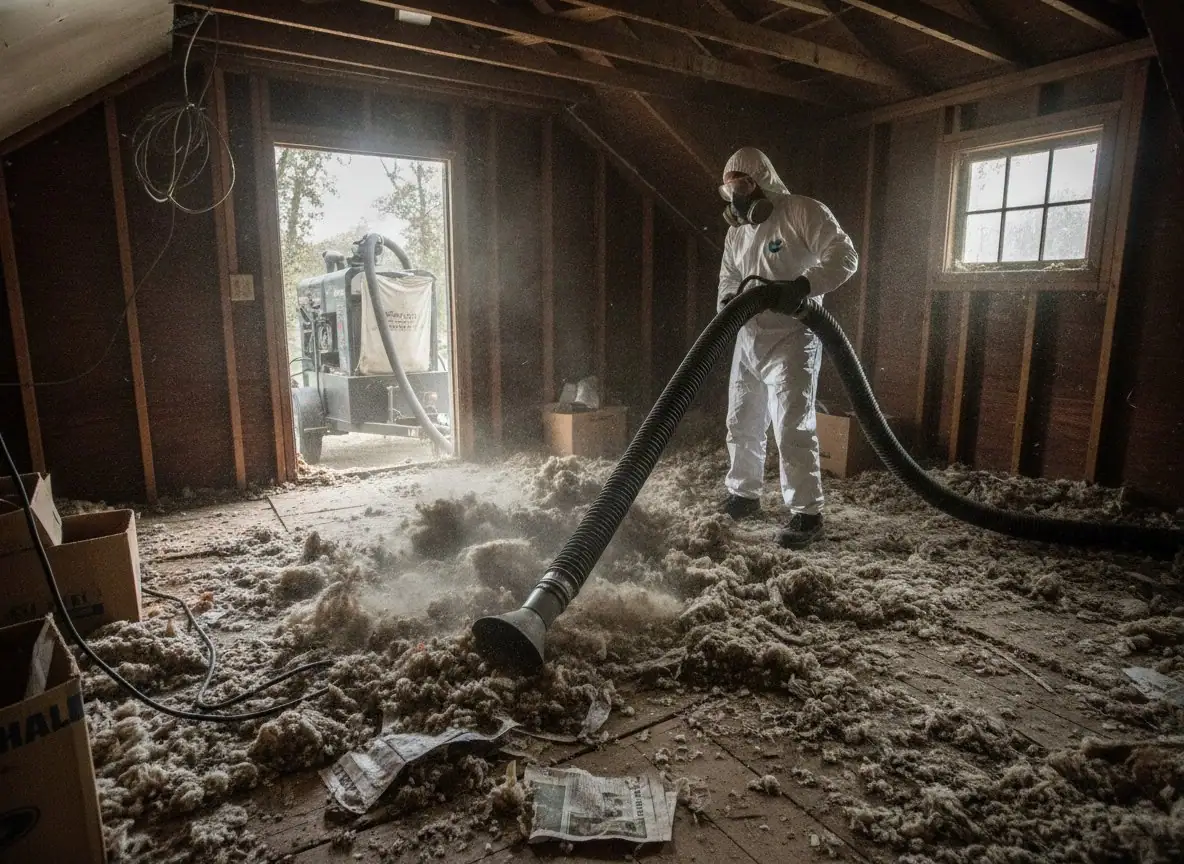
- Debris removal: We remove all loose material — old blown-in insulation, batt insulation, rodent nesting, droppings, and debris — using commercial-grade HEPA vacuums and negative-pressure equipment to prevent particulates from migrating into living areas. All waste is bagged and disposed of according to local guidelines.
- Decontamination: Every surface — rafters, sheathing, truss plates, and subfloor — is treated with an EPA-registered decontaminant that neutralizes pathogens left by rodents and other pests. This step is non-negotiable after any rodent intrusion; skipping it allows biohazards to remain even after the visible waste is gone.
- Sanitizing: An enzyme-based sanitizer is applied to eliminate residual odors at the molecular level. This is what prevents musty or ammonia smells from returning after re-insulation.
- Mold cleanup: Where mold is present on wood framing, we apply antimicrobial treatment and mechanical remediation to affected surfaces. Severe cases may require coordination with a licensed mold contractor for structural remediation beyond our scope.
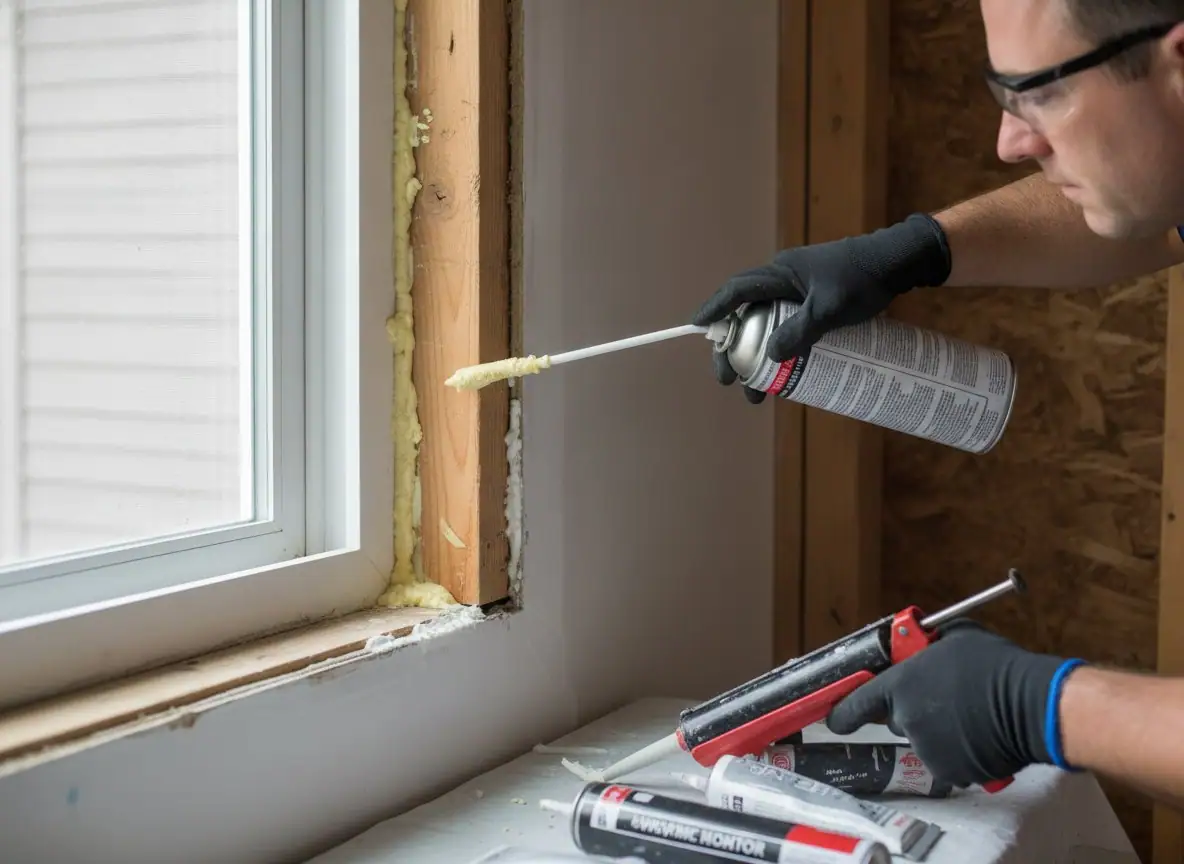
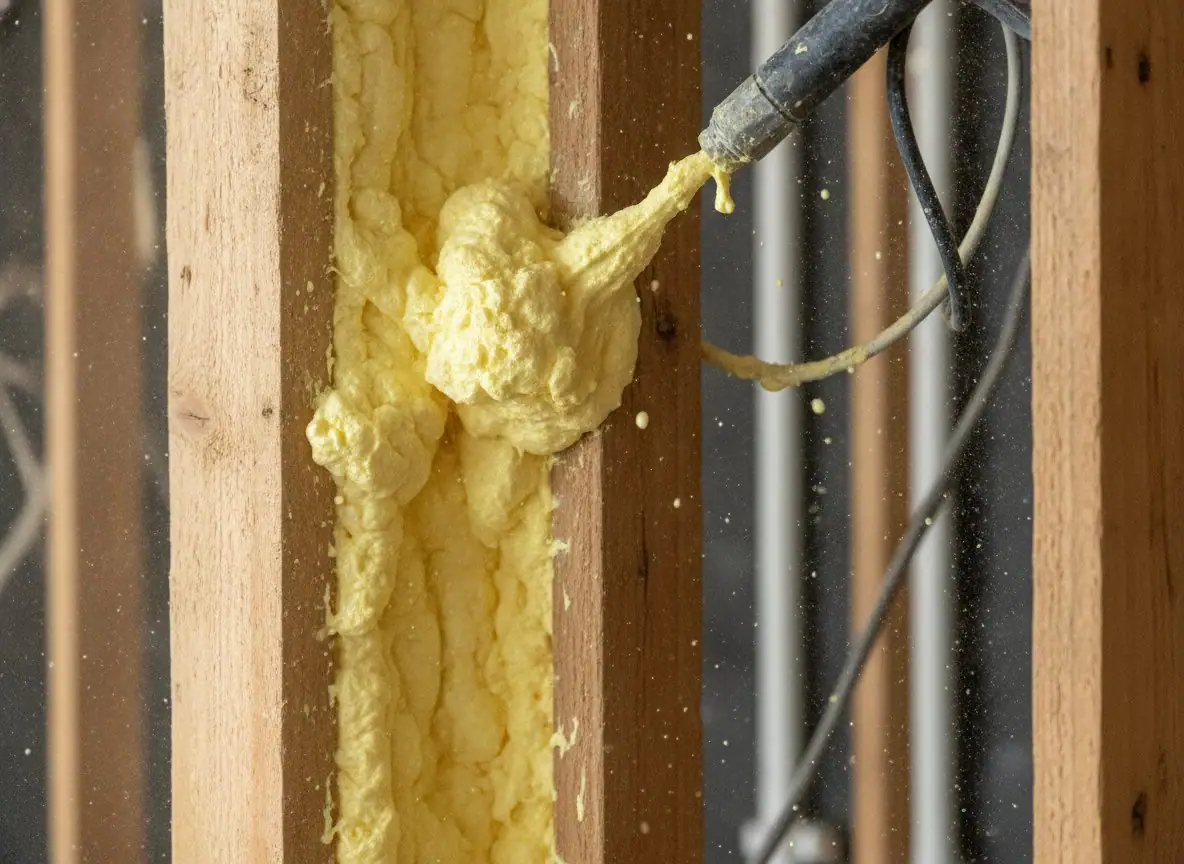
- Air sealing: Before any new insulation is placed, we seal all penetrations — plumbing stacks, electrical boxes, top plates, can lights — with spray foam or caulk. Air sealing is the step most often skipped by budget contractors, yet it delivers the greatest long-term energy savings and closes the pathways rodents used to enter.
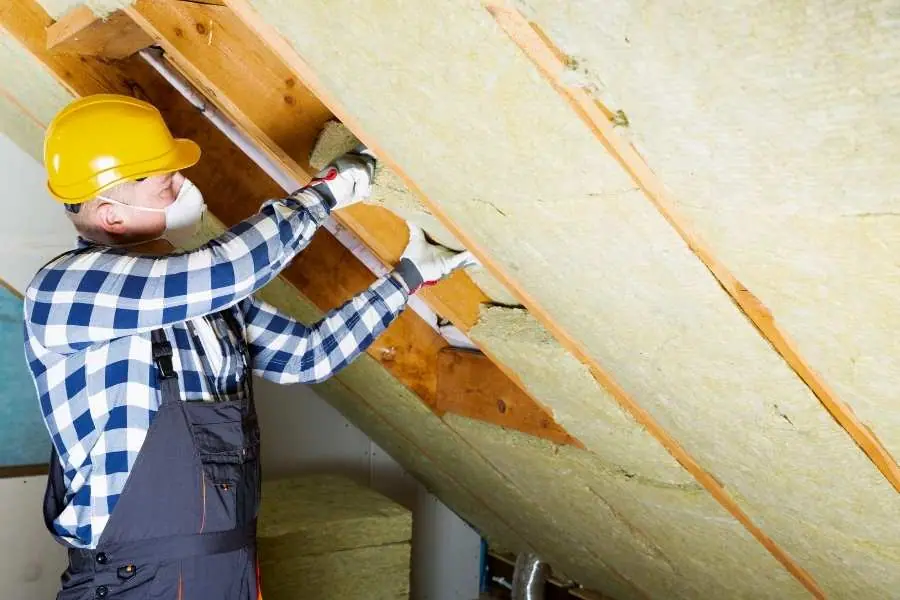
- Restoration / re-insulation: With a clean, sealed, and treated attic, new insulation is installed to current California Title 24 recommendations for the La Habra climate zone. We install blown-in or batt insulation, or spray foam insulation, depending on the attic's geometry, budget, and performance goals. Our spray foam page details what that option involves.
Read moreShow less
Before and after photos document the condition of the attic at each stage — see our gallery below.
[Before/After Photo Gallery — photos added by web team]
The mold cleanup step deserves a closer look because homeowners often underestimate how common and how serious attic mold is in this region.
How does attic mold removal and cleanup work?
Attic mold removal starts with identifying the moisture source that allowed mold to establish, then treating the affected surfaces and eliminating conditions that would let it return. In La Habra attics, mold typically appears on the underside of roof sheathing near soffit or ridge vents that have been blocked by old insulation — a known issue in homes where blown-in insulation was added without first clearing vent channels. We begin by confirming ventilation is functioning, then apply an antimicrobial agent to the affected wood. For surface mold on sound wood, wire brushing combined with antimicrobial treatment is usually sufficient. For mold that has penetrated deeply into sheathing or framing, affected boards may need to be replaced — a scope we coordinate with the homeowner before work begins. We document conditions and can provide a report to support an insurance claim. Is attic mold dangerous? Yes: certain mold species produce mycotoxins and spores that aggravate asthma, trigger allergies, and pose health risks to children and immunocompromised occupants. Any visible black or green growth on attic framing should be treated promptly. Once the mold situation is resolved, the next question is almost always whether the insulation needs to come out entirely.
Do you need to replace the insulation after an attic clean-up?
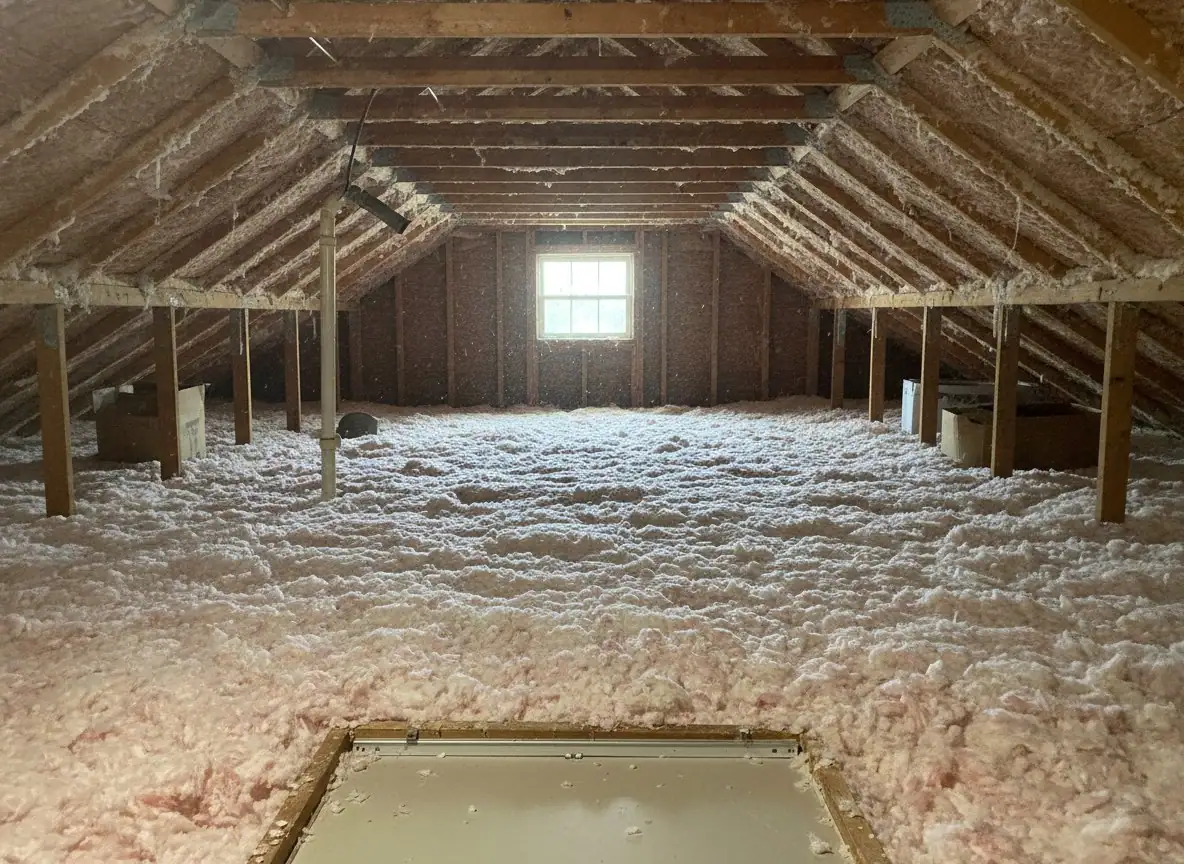
In most cases, yes — if the insulation was exposed to rodent activity, mold, or moisture, replacement is the safest and most practical choice. Insulation cannot be effectively sanitized in place: the material absorbs and retains biological contaminants, and simply treating the surface does not eliminate pathogens or odors throughout the mass. Fiberglass batts that have been compressed by pests, saturated by moisture, or stored for more than 15–20 years also lose significant R-value and no longer meet current California energy code minimums. The exception is insulation in an area that was completely unaffected by the contamination event and is confirmed clean and dry by visual inspection. We make this determination on-site during our free inspection and explain the finding clearly before recommending a full or partial replacement. How quickly all of this can be done is a practical concern for most homeowners.
How long does an attic clean-up take?
A typical attic clean-up and restoration takes one to three days, depending on attic size, contamination level, and whether mold remediation or rodent exclusion work is involved. Clearing out the old material sets the pace for the whole job, and a straightforward insulation removal and re-insulation in a standard 1,200–1,500 sq ft La Habra ranch home is usually completable in a single day. Attics with heavy rodent infestation residue, significant mold, or complex roof geometry — common in some of the older craftsman-era homes in the La Habra Heights foothills — may require an additional day for thorough decontamination to dry and cure before new insulation is placed. We schedule work to minimize disruption to the household and do not leave an attic partially open overnight. Cost is the next factor most homeowners need to understand.
At a glance
How much does attic cleaning cost in La Habra, CA?
The cost of attic cleaning in La Habra depends on several property-specific variables, which is why we provide a written quote after a free on-site inspection rather than publishing a flat rate. The table below identifies the main cost drivers and explains how each one affects the overall scope of work.
| Cost Factor | Why It Affects Price | What Increases Cost |
|---|---|---|
| Attic square footage | Determines volume of material to remove, treat, and replace | Larger footprint, bonus rooms, split-level attic spaces |
| Contamination level | Heavy rodent waste or widespread mold requires more labor, PPE, and product | Multi-year infestation, biohazard designation, mold on framing |
| Insulation type being removed | Dense-pack cellulose is heavier and slower to vacuum out than loose fiberglass | Multiple layers, mixed materials, vermiculite (requires special handling) |
| Attic access and pitch | Tight hatch openings, low pitch, or obstructions slow every phase of work | Access under 24 in., pitch below 4:12, knee-wall attics |
| Rodent exclusion needed | Sealing entry points adds materials and labor but is necessary to prevent re-infestation | Extensive perimeter gaps, damaged fascia, multiple entry points |
| Mold remediation extent | Surface mold versus structural mold require different treatments and drying time | Mold on structural members, need for board replacement |
| Re-insulation type | Spray foam costs more than blown-in; both outperform degraded batt on a per-R-value basis | Spray foam closed-cell, high target R-value, vapor barrier addition |
We provide a detailed written estimate at no charge after our technicians inspect the attic. The related question of loft cleaning — a term some homeowners use — raises a few additional variables worth explaining.
How much to clean a loft (and what changes the price)?
Loft and attic cleaning are priced on the same underlying factors: square footage, contamination severity, insulation type, and access. A converted loft or bonus room above living space can be more complex because finished surfaces — drywall, flooring, electrical fixtures — may need to be protected or temporarily removed to access the insulation cavity. If the loft has HVAC supply or return ducts running through it, the ductwork condition is assessed as part of our inspection, and damaged insulation found on those ducts during an attic clean-out is typically addressed at the same visit through our duct insulation service. Any scope changes discovered mid-project are communicated to the homeowner before we proceed. Knowing whether your insurance policy may offset these costs is a question worth asking early.
Read moreShow less
Insurance Claim Assistance: If your attic damage was caused by a covered event — sudden rodent intrusion, storm-driven moisture, or a documented mold event following a roof leak — Clean Zone Attic Insulation can document conditions and provide the written reports that support an insurance claim. We work directly with homeowners throughout the claims process.
Does insurance cover attic cleaning and restoration?
Homeowner's insurance may cover attic cleaning and restoration when the damage results from a covered peril, such as a sudden roof leak, storm damage, or in some policies, sudden and accidental rodent intrusion. Standard policies typically exclude gradual deterioration, long-term pest infestation, and maintenance-related neglect. The key word insurers use is "sudden and accidental" — if an adjuster can establish that damage developed over years, the claim is likely to be denied. To strengthen a claim, document the problem as soon as it is discovered, avoid disturbing the attic before an adjuster can inspect, and ask us for a written condition report from our inspection. We assist homeowners with this documentation as part of our service. With cost and insurance in mind, the final practical question is how to pick the right company for the job.
How to choose an attic cleaning company in La Habra
In La Habra, choose an attic cleaning company that offers a free on-site inspection, provides a written itemized estimate, and can demonstrate experience with both rodent exclusion and insulation replacement — not just one or the other. Here are the criteria that matter most:
- Scope of service: Confirm the company handles debris removal, decontamination, sanitizing, mold treatment, air sealing, and re-insulation in-house. Subcontracting any of these phases adds coordination risk and cost.
- Written estimate: Any reputable company will put the full scope and price in writing before work begins. Walk away from verbal-only quotes.
- Rodent exclusion included: Cleaning without sealing entry points means the problem returns. Ask specifically whether exclusion is part of the job.
- Insurance documentation support: If there is any chance your damage is insurable, the company should be willing to document conditions in a format an adjuster can use.
- Emergency availability: Active infestations and storm-driven moisture damage cannot always wait for a weekday appointment. Confirm the company offers emergency response.
- Financing options: A full attic restoration is a significant project; ask whether payment plans are available before assuming you must pay in full upfront.
- References or reviews: Check the company's Google Business profile for recent reviews from La Habra and nearby cities such as Brea, Fullerton, and Whittier.
Read moreShow less
When you have a company that meets these criteria, the next step is straightforward: schedule the inspection.
24/7 Emergency Service: Active rodent intrusion, storm damage, or sudden moisture in your attic cannot wait. Clean Zone Attic Insulation provides emergency attic cleaning and rodent-proofing services around the clock. Call (562) 526-0372 any time.
Book a free attic inspection and estimate
Clean Zone Attic Insulation in La Habra provides free on-site attic inspections to homeowners throughout La Habra and the surrounding communities — including Brea, Fullerton, Whittier, Yorba Linda, Buena Park, La Mirada, Norwalk, West Covina, La Puente, Downey, Cerritos, Anaheim, Santa Fe Springs, Placentia, Garden Grove, La Habra Heights, Hacienda Heights, and Rowland Heights. During the inspection, our trained technicians assess insulation condition, contamination type and extent, ventilation, air sealing gaps, and any structural concerns. You receive a written, itemized estimate before any work begins — no pressure, no obligation. Financing is available for qualifying projects, so cost does not have to delay a necessary repair. Call (562) 526-0372 to schedule your free inspection today.
FAQ
FAQ
Can attic insulation be cleaned, or does it have to be replaced?
Attic insulation that has been exposed to rodent urine and droppings, mold, or prolonged moisture cannot be effectively cleaned in place and should be replaced. The contamination penetrates the material, and surface treatment does not eliminate pathogens or odors throughout the mass. Insulation that is confirmed dry, uncontaminated, and still at an adequate R-value may be left in place, but this determination requires a physical inspection — it cannot be made from the outside. In most attic clean-out projects in La Habra, full insulation replacement is the appropriate outcome, and the replacement itself falls under our insulation services in La Habra.
Does cleaning air ducts really make a difference?
Yes, when ducts are genuinely contaminated — with rodent debris, mold, or heavy dust buildup — cleaning them reduces the volume of particulates circulating through the home. The benefit is most noticeable in homes where ductwork runs through a contaminated attic, because the same biological material in the insulation can enter ducts through gaps or damaged insulation around the duct exterior. Duct condition is part of what we assess during an attic inspection.
What happens if you never clean air ducts?
Contaminated ducts that are never cleaned continue to circulate dust, allergens, mold spores, and rodent-related pathogens through the home every time the HVAC system runs. Over time this degrades indoor air quality and can worsen respiratory conditions. In an attic that has had rodent activity, leaving ducts untreated after a clean-out undermines the entire decontamination effort.
Is attic mold dangerous, and how do I know if I have it?
Attic mold is dangerous. Certain mold species produce mycotoxins and airborne spores that aggravate asthma, cause allergic reactions, and pose health risks to children, elderly occupants, and anyone with a compromised immune system. In La Habra attics, mold most often appears as black or dark green staining on the underside of roof sheathing, typically near blocked soffit vents where moisture accumulates. You may also notice a persistent musty smell in rooms directly below the attic. The only reliable way to confirm mold and assess its extent is a physical inspection — visual checks from an attic hatch are frequently inconclusive.
Can you clean the attic after rats have been removed?
Yes, and this is the recommended sequence: pest control first, meaning rat in the attic removal and rodent proofing, to eliminate the active infestation, then professional attic cleaning to remove the biological waste left behind. Skipping the clean-out after rat removal leaves urine, droppings, and nesting material in place, which continues to pose health risks and attracts new rodents. Our attic cleaning service includes decontamination of all surfaces affected by rodent activity, followed by air sealing to close the entry points so the problem does not recur.
Do you offer financing for attic cleanup and re-insulation?
Yes. Clean Zone Attic Insulation offers financing for qualifying attic cleanup and re-insulation projects. A full attic restoration — removal, decontamination, air sealing, and new insulation — is a meaningful investment, and financing allows homeowners to address the problem promptly rather than delaying while health and energy costs continue to climb. Ask about financing options when you call to schedule your free inspection at (562) 526-0372.
Why choose us
Why choose Clean Zone Attic Insulation?
Free estimates
Get a clear, no-obligation estimate before any work begins.
Licensed & insured
Your property and our crew are protected on every project.
Residential & commercial
One team for homes, multi-family and commercial properties.
Locally owned & operated
A local team serving your community and the surrounding area.
Get in touch
Find insulation help near you
Request a free estimate online or give us a call — our team will follow up quickly.
- Call us(562) 526-0372
- Visit731 N Beach Blvd, La Habra, CA 90631
- HoursMon-Sun 07:00-19:00